What Your Old Refrigerator Is Really Worth Before It Hits the Landfill
Every year, millions of American households retire aging refrigerators, dishwashers, washing machines, and microwaves. Some are donated. Many are simply pushed to the curb. A significant portion ends up in landfills, quietly decomposing alongside food waste and discarded furniture. What most consumers never learn is that the appliance they hauled out to the driveway may have contained anywhere from $50 to several hundred dollars' worth of recoverable raw materials—materials that, when properly processed, re-enter the manufacturing supply chain and reduce the need for environmentally costly extraction.
Understanding what is actually inside these machines—and who recovers it—is the first step toward making smarter, more responsible disposal decisions.
The Material Wealth Hidden Inside Common Appliances
A standard household refrigerator is far more than a cold box. Its inner workings contain a surprisingly diverse collection of valuable materials. The compressor alone typically houses a significant quantity of copper wiring and copper tubing, a metal that consistently commands strong prices on global commodity markets. Aluminum is present in the condenser coils, evaporator components, and interior structural elements. Steel forms the bulk of the outer casing and internal shelving frameworks, while certain older models contain small quantities of brass fittings.
Perhaps less obvious is the refrigerant—chemicals such as R-134a or older Freon compounds—sealed within the cooling system. These substances carry both monetary recovery value and serious environmental consequence if improperly released. Under the U.S. Environmental Protection Agency's Section 608 regulations, refrigerant must be recovered by certified technicians before any appliance is scrapped. Violations can result in substantial fines, a regulatory reality that underscores how seriously the government treats the improper disposal of these materials.
Washing machines and dryers follow a similar pattern. A front-loading washing machine can contain several pounds of copper in its motor windings, along with stainless steel drums, aluminum components, and electronic control boards that carry trace amounts of gold and palladium. Dishwashers and ranges, while less metal-dense, still yield recoverable steel and copper in quantities that add up meaningfully at scale.
Microwaves, often treated as the most disposable of kitchen appliances, contain magnetron tubes that include small quantities of beryllium—a material that requires careful handling due to its toxicity but holds value in specialized industrial applications.
What Happens When These Appliances Go to the Landfill
When a refrigerator enters a municipal landfill without proper processing, the consequences extend well beyond wasted economic opportunity. The refrigerant, if not recovered, eventually escapes into the atmosphere. Many older refrigerants are potent greenhouse gases with global warming potentials hundreds or thousands of times greater than carbon dioxide. The foam insulation used in refrigerator walls often contains blowing agents with similar environmental profiles.
Metals that could be melted down and reused instead leach slowly into surrounding soil and groundwater as casings corrode over decades. Compressor oils, which may contain traces of hazardous compounds, migrate into the landfill's leachate stream. The cumulative effect of millions of improperly discarded appliances represents a substantial, ongoing environmental liability—one that responsible recycling infrastructure is specifically designed to prevent.
The financial dimension is equally sobering. The United States generates an estimated nine million tons of large household appliances annually, a category the industry refers to as "white goods." A meaningful fraction of the material value embedded in that waste stream simply disappears into the ground, representing a failure of both consumer awareness and accessible recycling infrastructure.
Where the Value Goes When Appliances Are Properly Recycled
The appliance recycling process, when executed correctly, is a methodical recovery operation. Certified recyclers begin by removing refrigerant and oils before any mechanical processing begins. Once the hazardous materials are safely extracted, the appliance moves through a shredding or dismantling process designed to separate ferrous metals, non-ferrous metals, plastics, and foam.
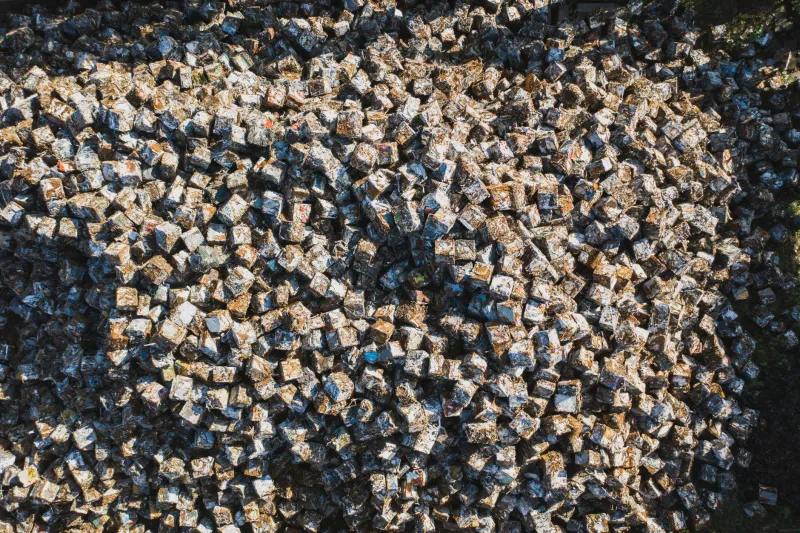
Ferrous steel—the largest component by weight in most large appliances—is baled and sold to steel mills, where it is melted and incorporated into new steel products. Non-ferrous metals, including copper and aluminum, are sorted and sold to specialty smelters. The price per pound for these materials fluctuates with commodity markets, but copper has historically ranged between $3 and $4 per pound at the scrap level, while aluminum typically trades between $0.50 and $1.00 per pound depending on grade and market conditions.
For a single refrigerator containing five to ten pounds of copper and fifteen to twenty pounds of aluminum, the material value recovered by a professional recycler can easily exceed $30 to $60 in metals alone—before accounting for the steel casing, which adds further value in bulk. Multiply that across the tens of millions of appliances processed annually by the recycling industry, and the aggregate economic activity becomes substantial.
Practical Options for American Consumers
For households navigating an appliance replacement, several pathways exist that are both environmentally responsible and, in some cases, financially advantageous.
Retailer take-back programs represent the most convenient option for many consumers. Major appliance retailers, including Best Buy and Home Depot, offer haul-away services when delivering new appliances. These programs vary by location and appliance type, so confirming availability at the point of purchase is advisable.
Utility company rebate programs are worth investigating before disposal. Many electric and gas utilities across the country operate appliance recycling incentive programs that pay consumers directly—often between $25 and $75 per unit—to retire old, energy-inefficient refrigerators and freezers. The utility benefits by reducing demand on the grid from inefficient appliances; the consumer receives a cash incentive while ensuring proper disposal.
Municipal collection events are another accessible avenue. Many cities and counties host periodic large-item collection days specifically for appliances and electronics. These events are typically free to residents and ensure that materials are directed to certified recyclers rather than landfills.
Scrap metal dealers and certified appliance recyclers will often accept appliances directly, and in some markets may offer payment depending on current commodity prices and the condition of the unit. Calling ahead to confirm acceptance policies and any associated fees is recommended.
For appliances that remain functional, donation to organizations such as Habitat for Humanity's ReStore network or local community assistance programs extends the useful life of the product and keeps materials in circulation longer—arguably the most resource-efficient outcome of all.
Rethinking the Value of What We Discard
The tendency to treat a broken refrigerator as a problem to be removed as quickly as possible is understandable. Appliances are bulky, their malfunction is often inconvenient, and the urgency of replacement tends to crowd out careful thinking about disposal. But the materials inside that aging machine did not lose their value simply because the appliance stopped working.
Copper is still copper. Aluminum is still aluminum. The steel that formed the casing remains fully recyclable, regardless of how long the appliance sat unused in a garage.
Responsible waste management is not only an environmental imperative—it is an economic one. When consumers direct appliances toward certified recyclers and established take-back programs, they participate in a supply chain that reduces the need for virgin material extraction, lowers manufacturing energy consumption, and supports a domestic recycling industry that employs tens of thousands of American workers.
The broken refrigerator at the end of its service life is not the end of the story. It is, with the right disposal decision, the beginning of another one.