Silicon to Scrap Yard: How Tech Giants Are Cutting Out the Recycling Middleman
For decades, the relationship between technology manufacturers and the recycling industry operated on a straightforward premise: companies built devices, consumers used them, and when those devices reached the end of their useful lives, independent recyclers handled the messy work of disassembly, material recovery, and responsible disposal. That arrangement, long taken for granted by everyone in the supply chain, is now under significant strain.
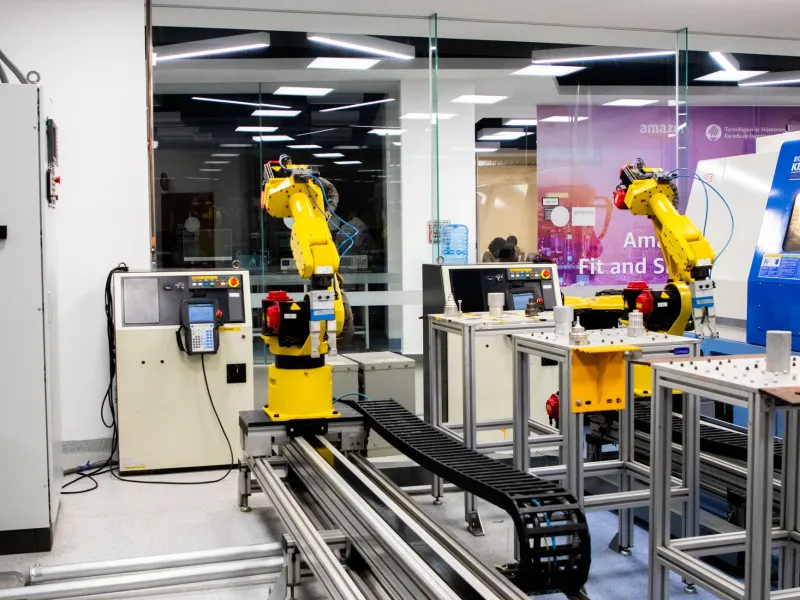
A growing number of the world's largest technology corporations are investing heavily in proprietary recycling infrastructure — building in-house facilities, deploying custom robotics, and engineering closed-loop manufacturing systems designed to recover materials from their own products without ever routing them through a traditional recycler. The trend is accelerating, and its implications for the broader e-waste industry are profound.
The Economics Behind the Vertical Integration Push
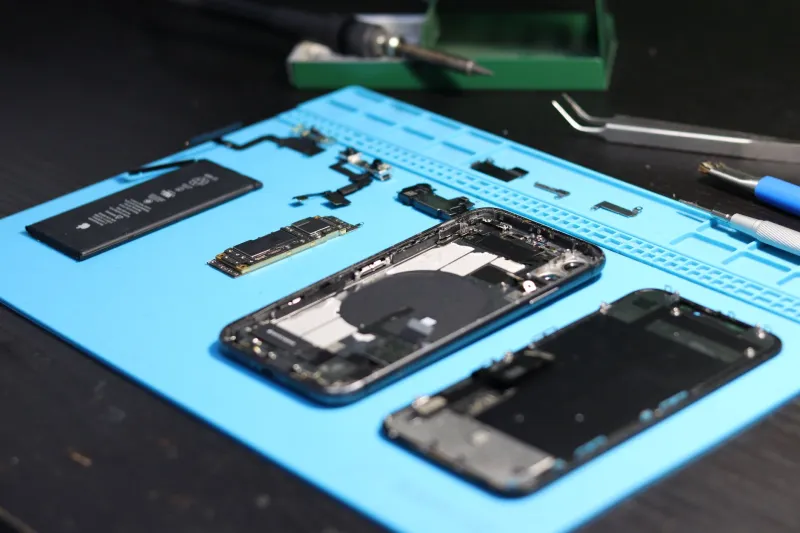
To understand why tech companies are making this move, it helps to follow the money. Modern consumer electronics are extraordinarily rich in recoverable materials. A single iPhone contains gold, silver, copper, cobalt, rare earth elements, and dozens of other substances that retain measurable market value long after the device stops functioning. Historically, that residual value flowed to whichever recycler processed the unit.
As global demand for these materials has intensified — driven in large part by the explosive growth of electric vehicles, renewable energy infrastructure, and next-generation semiconductor manufacturing — the economics of material recovery have become increasingly attractive. Technology companies, already sophisticated about supply chain management, have recognized that recovering materials from their own retired products is not merely a sustainability gesture. It is, under the right conditions, a genuine competitive advantage.
Controlling the recovery process allows manufacturers to reduce their exposure to volatile raw material markets, strengthen the security of their supply chains, and accumulate proprietary knowledge about material composition and disassembly techniques that outside recyclers simply do not possess.
Apple's Daisy and the Age of Robotic Disassembly
No single development has drawn more attention to this trend than Apple's Daisy disassembly robot. Introduced in 2019 and subsequently upgraded, Daisy is capable of disassembling up to 23 different iPhone models at a rate of approximately 1.2 million units per year. The machine identifies components, removes screws, separates battery cells, and isolates specific material streams with a precision that manual labor cannot consistently replicate at scale.
What makes Daisy particularly significant is not the robot itself but the philosophy it represents. Apple engineered Daisy to recover materials in a form pure enough to feed back directly into manufacturing processes — a goal the company describes as "closed-loop supply chain" thinking. In practical terms, this means aluminum recovered from old iPhones is being used to produce new iPhone enclosures, and rare earth magnets extracted from retired devices are being incorporated into fresh production runs.
Apple has also introduced Taz, a machine designed to shred entire devices to liberate trapped materials more efficiently. Together, these systems represent a level of engineering investment in end-of-life product management that would have been difficult to imagine from a consumer electronics company a decade ago.
Dell and the Circular Manufacturing Model
Apple is not operating in isolation. Dell Technologies has pursued its own version of vertical integration through what it calls a "closed-loop recycling" initiative for plastics. Under this program, plastics recovered from old Dell products are processed and reintroduced into the manufacturing of new Dell equipment — a supply chain loop that reduces both the demand for virgin petroleum-based plastics and the volume of material requiring conventional recycling disposal.
Dell has also established partnerships with prison labor programs and community-based collection networks to broaden its device recovery footprint, though those arrangements have attracted their own scrutiny regarding labor practices and transparency. What remains clear is the company's strategic intent: to treat its retired product inventory as a raw material resource rather than a liability to be transferred elsewhere.
Other major manufacturers, including Samsung and HP, have announced varying degrees of commitment to similar models, signaling that in-house material recovery is becoming an industry-wide expectation rather than a niche experiment.
What This Means for Traditional Recyclers
The rise of manufacturer-controlled recycling creates genuine competitive pressure on the independent recycling sector. When Apple recovers its own iPhones and Dell reclaims its own plastics, those material streams are no longer available to third-party processors. For recyclers who have built their business models around high-value electronics, the shrinkage of accessible feedstock is a meaningful concern.
There is also a transparency dimension worth examining carefully. Independent recyclers operating under certifications such as R2 (Responsible Recycling) and e-Stewards are subject to third-party audits that verify downstream material handling, environmental compliance, and worker safety standards. Manufacturer-operated facilities, by contrast, are largely self-reporting. The public currently has limited visibility into how rigorously these in-house programs meet the environmental standards that certified independent recyclers are required to demonstrate.
This is not an argument that corporate recycling programs are inherently less responsible. It is, however, a reason for consumers and policymakers to ask pointed questions about verification, accountability, and what happens to devices that fall outside the manufacturer's preferred recovery channels.
The Consumer's Position in a Shifting Landscape
For American consumers seeking to dispose of old electronics responsibly, the proliferation of manufacturer take-back programs adds a layer of complexity to an already confusing landscape. Apple's trade-in and recycling program, Dell's mail-back options, and similar initiatives from other brands are legitimate disposal pathways — but they are not universally accessible, and they are not designed to accept competing brands' products.
A consumer with a drawer full of mixed-brand devices, aging laptops, and obsolete tablets will still need to rely on independent recyclers, municipal collection events, or certified e-waste processors to handle that material responsibly. The manufacturer-operated model, by its nature, is brand-specific and volume-optimized. It does not solve the broader e-waste challenge; it addresses a profitable subset of it.
For the millions of Americans who do not regularly upgrade through manufacturer trade-in programs, or who hold onto devices well past the point where a manufacturer's recovery system remains interested in them, the independent recycling sector remains the essential backstop.
A Competitive Pressure That Could Raise the Bar
It would be reductive to frame this trend as purely adversarial. The investment that technology companies are making in recycling technology — robotics, materials science, closed-loop engineering — is generating knowledge and innovation that has the potential to benefit the broader industry over time. As disassembly techniques improve and material recovery rates increase, those advances do not remain permanently proprietary.
Moreover, the visibility that high-profile programs like Daisy generate around e-waste issues helps educate consumers about the value of responsible disposal — an awareness that ultimately benefits every actor in the recycling ecosystem, independent operators included.
The more consequential question is whether this wave of corporate recycling investment will be matched by genuine regulatory accountability. Voluntary programs, however sophisticated, are not substitutes for enforceable standards that apply consistently across both manufacturer-operated and independently operated facilities.
As the line between technology company and recycling operation continues to blur, the standards that govern material recovery, environmental compliance, and supply chain transparency will need to evolve accordingly. The e-waste industry is changing rapidly. The frameworks designed to keep it honest must change with equal speed.