Dead Batteries, Living Fortunes: The Scramble to Recover Wealth Hidden Inside Your Old Devices
The battery inside your smartphone is, by most measures, an unremarkable object. Slim, silent, and taken entirely for granted until the moment it refuses to hold a charge, it typically ends its service life in one of two undignified ways: stuffed into a kitchen drawer alongside expired coupons and mystery keys, or dropped into a trash bin headed for a landfill. Neither outcome is particularly glamorous — and both represent a staggering economic and environmental miscalculation.
Because that dead battery is not worthless. Far from it.
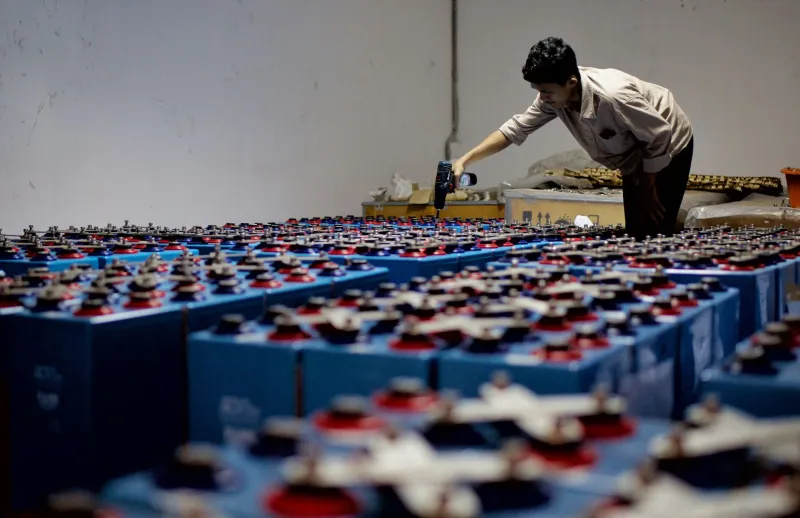
Lithium-ion batteries — the dominant energy storage technology in smartphones, laptops, power tools, and electric vehicles — contain recoverable quantities of lithium, cobalt, nickel, manganese, and copper. At industrial scale, those materials command prices that rival precious metals on the commodities market. Cobalt alone has traded above $30 per pound in recent years. Lithium carbonate, the refined compound extracted from spent cells, has surged and fluctuated dramatically alongside the EV boom. And yet, the U.S. Environmental Protection Agency estimates that fewer than five percent of lithium-ion batteries are currently recycled in the United States.
The rest are lost.
A Supply Chain Problem in Reverse
To understand why battery recycling has become one of the most fiercely contested industrial opportunities in America, it helps to think about the supply chain running backward. Automakers, electronics manufacturers, and grid-storage developers all depend on a steady supply of battery-grade critical minerals — materials that are largely mined overseas, often under environmentally and ethically fraught conditions. The Democratic Republic of Congo supplies roughly 70 percent of the world's cobalt. Lithium extraction is concentrated in South America's so-called Lithium Triangle. The United States, despite its industrial ambitions, produces relatively little of either domestically.
Recycling spent batteries offers a domestic alternative. Instead of mining new ore from the earth, companies can process end-of-life cells and recover materials at purities suitable for reintroduction into battery manufacturing. The industry even has a term for it: urban mining. The metaphor is apt. America's accumulated stock of discarded electronics and aging EV battery packs constitutes an enormous, if dispersed, mineral deposit — one that requires chemistry rather than excavation to unlock.
The numbers are beginning to reflect that reality. According to a 2023 report from the Rocky Mountain Institute, the U.S. lithium-ion battery recycling market is projected to exceed $6 billion annually by 2030, driven primarily by the accelerating adoption of electric vehicles. With major automakers committing to all-electric or predominantly electric lineups within the decade, the volume of batteries reaching end-of-life will increase exponentially. The question is whether the recycling infrastructure will be ready to receive them.
The Technology Closing the Gap
For years, battery recycling was a technically limited enterprise. Early processes — primarily pyrometallurgy, which involves smelting battery materials at extreme temperatures — were energy-intensive, expensive, and capable of recovering only a fraction of a battery's valuable content. Lithium, in particular, was often lost entirely in the smelting process, making the economics difficult to justify at scale.
The last several years have seen a meaningful technological shift. Hydrometallurgical processes, which use aqueous chemical solutions to selectively dissolve and separate battery components, now allow recyclers to recover lithium, cobalt, nickel, and manganese with significantly greater efficiency. Direct recycling — an emerging approach that preserves the cathode material's crystalline structure rather than breaking it down entirely — promises even higher recovery rates and lower energy inputs, though it remains largely at the pilot stage.
Several American companies have moved aggressively to commercialize these methods. Li-Cycle, Redwood Materials, and Ascend Elements are among the firms that have attracted substantial investment and announced large-scale U.S. processing facilities. Redwood Materials, founded by former Tesla executive JB Straubel, has positioned itself as a closed-loop supplier — recovering materials from end-of-life batteries and returning refined product directly to battery manufacturers. The model, if it achieves the scale its backers anticipate, could meaningfully reduce American dependence on imported critical minerals.
Policy as Accelerant
Federal policy has played an increasingly active role in shaping the competitive landscape. The Inflation Reduction Act of 2022 introduced domestic content requirements for EV tax credits, creating strong economic incentives for automakers to source battery materials from U.S.-based suppliers — including recyclers. The Department of Energy has directed billions of dollars in loan guarantees and grant funding toward battery manufacturing and recycling infrastructure through its Loan Programs Office and the Bipartisan Infrastructure Law.
At the state level, regulations are beginning to catch up. California has long maintained a battery stewardship program for consumer electronics, and several other states are advancing extended producer responsibility legislation that would require manufacturers to fund and facilitate battery collection and recycling. These frameworks, modeled on successful programs in the European Union, shift the financial burden of end-of-life management from municipalities and consumers onto the companies that profit from battery sales — a policy logic that has found growing bipartisan support.
Still, regulatory gaps remain substantial. There is no federal mandate requiring battery recycling, no uniform national collection infrastructure, and no standardized labeling system that clearly communicates to consumers that their spent devices contain recoverable value. The result is a patchwork of voluntary programs, retailer take-back initiatives, and municipal drop-off sites that collectively reach only a small fraction of the batteries entering the waste stream each year.
The Consumer Equation
Perhaps the most underappreciated dimension of the battery recycling challenge is the behavioral one. Most Americans have no meaningful awareness that the devices accumulating in their junk drawers contain materials worth recovering. The concept of a smartphone battery as a mineral asset — something with residual commodity value — simply does not register in everyday consumer thinking.
Closing that awareness gap requires more than public service announcements. It requires accessible, convenient collection infrastructure at the places where consumers already shop and dispose of old electronics. It requires clear, consistent messaging from manufacturers about where and how to return spent batteries. And it requires, in some cases, financial incentives that make the act of responsible disposal feel rewarding rather than burdensome.
Some retailers have made meaningful progress. Best Buy operates one of the most extensive consumer electronics take-back programs in the country, accepting rechargeable batteries at no charge. Home Depot and Lowe's accept certain battery types as well. But coverage is uneven, awareness is low, and the friction of making a special trip to a drop-off location remains a significant deterrent for many consumers.
What Comes Next
The trajectory of lithium-ion battery recycling in the United States is, on balance, promising — but the gap between potential and reality remains wide. The technology to recover valuable materials efficiently exists and is improving. The economic incentives are aligning. Federal and state policy is beginning to provide structural support. What lags behind is the physical infrastructure to collect batteries at scale and the public understanding to drive participation.
For businesses and municipalities, the window to build that infrastructure is now. The wave of EV battery retirements projected for the late 2020s and early 2030s will arrive regardless of whether the recycling sector is prepared to handle it. Companies that invest in collection networks, processing capacity, and consumer education today will be positioned to capture significant value from that incoming material stream. Those that wait may find themselves on the wrong side of a supply chain that has already reorganized around recovered materials.
The wealth inside America's dead batteries is real. The only question is whether we build the systems to reclaim it — or continue to bury it.