Curbside Upheaval: How America's Municipalities Are Rebuilding Recycling From the Ground Up
For most Americans, recycling has long operated as a kind of civic background noise — bins placed at the curb each week, trucks arriving on schedule, and a quiet assumption that the materials inside would find their way to some productive second life. That comfortable routine is now being dismantled, city by city, in ways that will reshape what residents can recycle, how they must sort it, and what the process will ultimately cost their communities.
The disruption is real, it is widespread, and — despite the anxiety it is generating among municipal administrators and environmentally conscious households alike — it may be the most honest reckoning the American recycling system has ever been forced to confront.
The Wound That Opened in 2018
To understand the present crisis, one must return to January 2018, when China implemented its National Sword policy, effectively slamming the door on the import of low-quality recyclable materials from the United States. For decades, American municipalities had relied on Chinese markets to absorb vast quantities of mixed paper, plastics, and other secondary commodities — often with little concern for contamination levels or material purity. When that outlet closed, the consequences were immediate and severe.
Recycling haulers across the country found themselves holding materials they could no longer sell. Processing facilities that had operated on thin margins suddenly faced negative commodity values — meaning they were paying to get rid of the very materials they had been collecting. Dozens of municipalities, particularly smaller cities and rural counties, suspended their recycling programs altogether. Others quietly began routing collected recyclables to landfills rather than processing centers, a practice that drew sharp criticism from environmental advocates.
The scale of the damage was substantial. According to data compiled by the Institute of Scrap Recycling Industries, the value of exported recyclable commodities dropped by hundreds of millions of dollars in the years immediately following National Sword. The era of cheap, convenient recycling — subsidized in large part by Chinese demand — had ended without warning.
Federal Pressure Adds to Local Urgency
If National Sword cracked the foundation, evolving EPA standards and growing federal scrutiny of waste management practices have continued to apply pressure. The agency has increasingly emphasized material quality over material volume, pushing back against the "aspirational recycling" culture that encouraged residents to toss questionable items into blue bins on the theory that someone, somewhere, would figure out what to do with them.
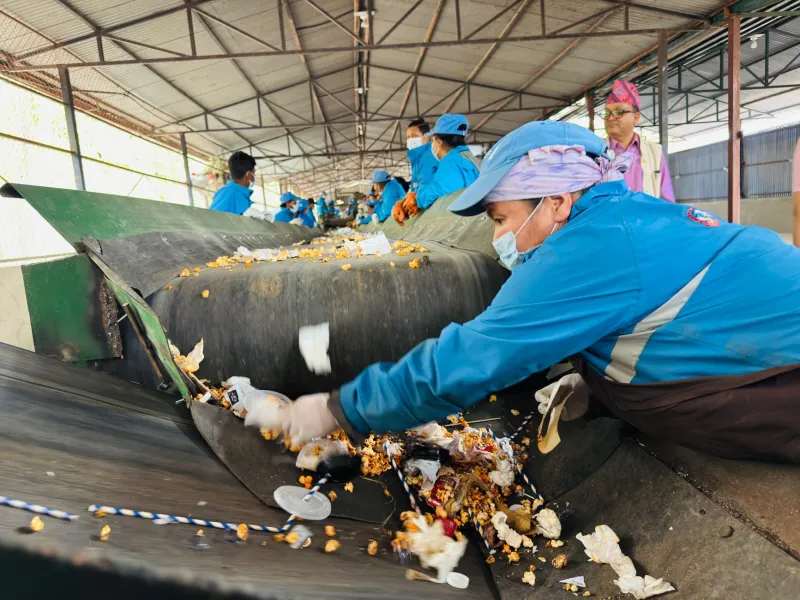
New federal guidance has reinforced what recycling professionals have long known: contaminated loads are not merely inefficient — they are actively harmful. A single bin filled with food-soiled cardboard, plastic bags, or non-recyclable plastics can compromise an entire truckload of otherwise recoverable material. The EPA's updated frameworks are nudging municipalities toward stricter collection standards, enhanced public education requirements, and more rigorous auditing of what actually happens to materials after collection.
For city administrators already managing strained budgets, these mandates are arriving at a difficult moment. The cost of responsible recycling has risen sharply, and the revenue that once offset those costs has largely evaporated.
What Cities Are Actually Doing
The municipal responses unfolding across the country vary considerably in approach, but several clear trends have emerged.
Narrowing accepted materials. A growing number of cities are eliminating categories of materials that were once accepted but proved difficult to process profitably. Glass, long a problematic recyclable due to its weight and tendency to shatter and contaminate other materials, has been removed from curbside programs in cities including Philadelphia and Memphis. Many municipalities have also dropped acceptance of plastics numbered 3 through 7, retaining only the more consistently marketable #1 (PET) and #2 (HDPE) resins.
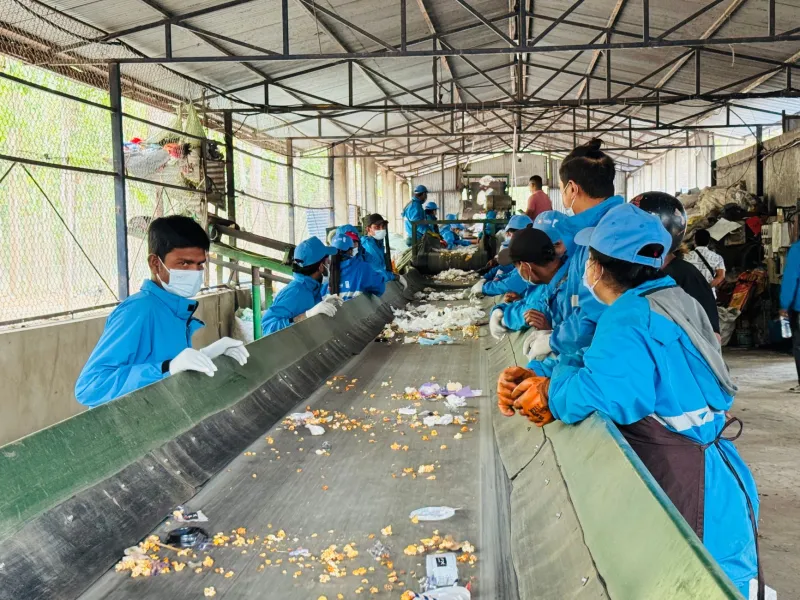
Shifting to dual-stream collection. Single-stream recycling — the practice of commingling all recyclables in one bin — gained popularity in the 1990s and 2000s because it increased participation rates. However, it also dramatically increased contamination. A number of cities are reverting to dual-stream or even multi-stream collection systems that require residents to separate paper from containers. Studies have consistently shown that sorted materials command higher prices and are more reliably recycled.
Investing in domestic processing capacity. Some forward-looking municipalities and regional authorities are channeling funds into partnerships with domestic materials recovery facilities, reducing dependence on volatile export markets. While domestic processing is generally more expensive in the short term, it offers greater supply chain stability and keeps economic activity within US borders.
Introducing or increasing recycling fees. Perhaps the most politically sensitive shift involves direct cost recovery. For years, recycling programs were marketed to residents as cost-neutral or even revenue-generating services. That framing is no longer tenable in most markets. Cities including Deltona, Florida and several municipalities in Oregon have introduced explicit recycling surcharges, a move that — while unpopular — more accurately reflects the true cost of responsible waste diversion.
Why Disruption Is Not Defeat
It would be easy to read these changes as evidence that recycling is failing. That interpretation misses a more important truth. The system that is currently being dismantled was, in many respects, built on a fiction — the convenient belief that depositing mixed, often contaminated materials into a bin was equivalent to recycling them. In a significant number of cases, it was not.
The reforms now underway are forcing a more honest accounting. Municipalities that accept fewer materials but process them with genuine integrity are contributing more to the circular economy than programs that collect broadly but deliver contaminated loads to landfills. Residents who understand exactly which materials are recoverable in their community — and who prepare those materials correctly — are more valuable participants in the recycling system than those who fill bins indiscriminately.
This is not a comfortable message, but it is an accurate one. The disruption of familiar recycling routines creates an opening for communities to build something more durable and more transparent in their place.
What Residents Should Do Right Now
Given the pace and geographic variation of these changes, the most important step any resident can take is to verify the current accepted materials list for their specific municipality. National guidelines are a useful starting point, but local programs differ substantially. Many cities have updated their recycling guidelines in the past 12 to 24 months, and what was accepted two years ago may no longer be.
Beyond that, the fundamentals of responsible recycling remain consistent: clean materials, no plastic bags in curbside bins, no food residue on paper or cardboard, and no wishful inclusion of items that "might" be recyclable. When in doubt, the landfill is a more honest destination than a contaminated recycling bin.
The transformation of America's curbside recycling programs is neither quick nor painless. But communities that engage with these changes — rather than simply waiting for instructions — will be better positioned to participate meaningfully in the sustainable waste systems that are being constructed to replace the old, fragile model.