When One Bad Load Brings Everything to a Halt: The Hidden Cost of Recycling Contamination
It takes years to build a functioning recycling ecosystem. It can take a single truckload to break one.
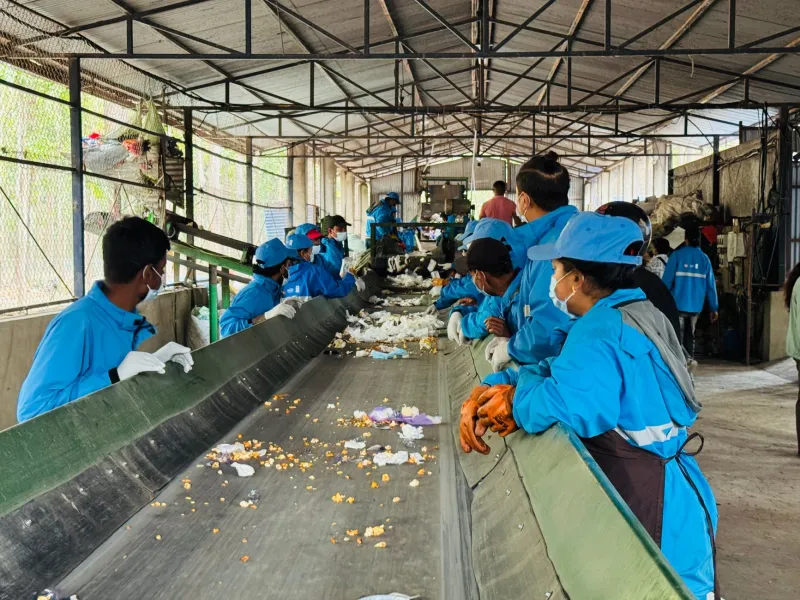
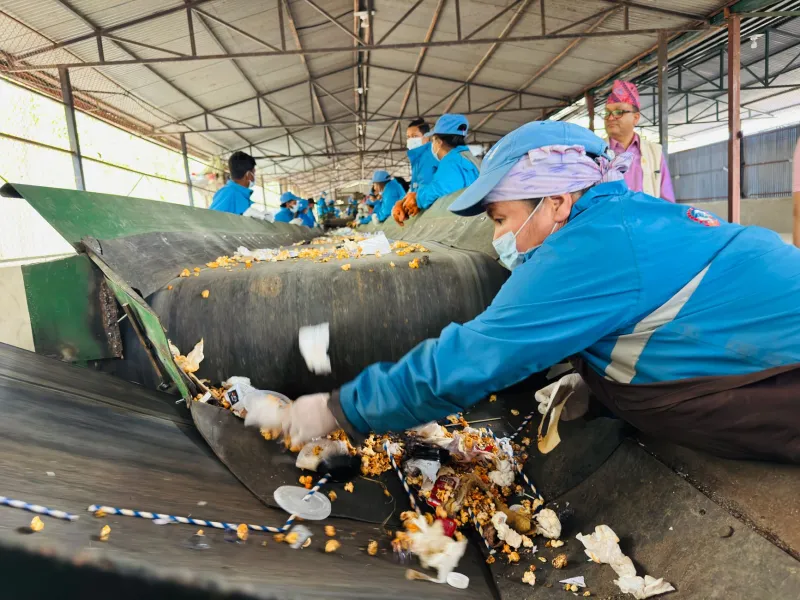
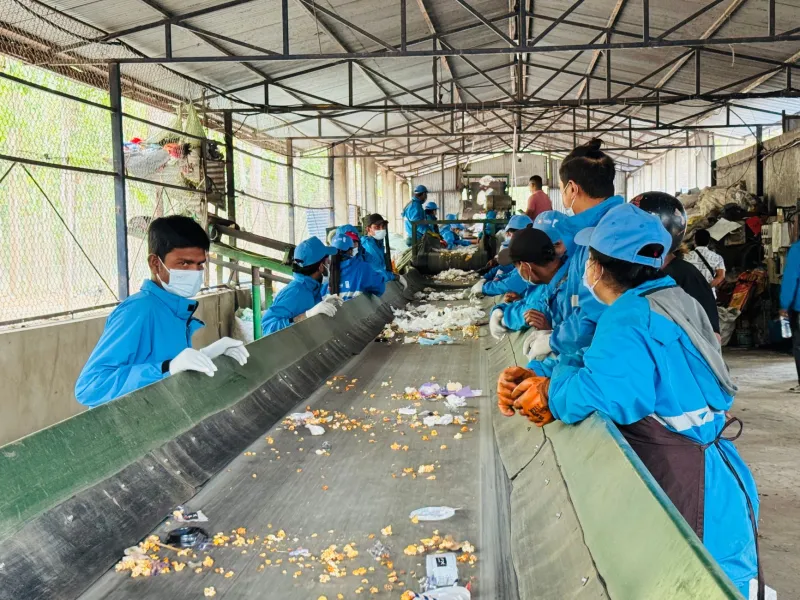
Across the United States, materials recovery facilities — commonly known as MRFs — process millions of tons of recyclable material every year. These facilities are sophisticated industrial operations, relying on a precise choreography of conveyor belts, optical sorters, magnetic separators, and human labor to transform mixed curbside collections into marketable commodities. But the entire system rests on one foundational assumption: that the material entering the facility is reasonably clean and appropriately sorted.
When that assumption fails — and it fails far more often than most Americans realize — the consequences ripple far beyond a single facility's loading dock.
What Contamination Actually Means
The term "contamination" is frequently misunderstood by the public. Many people assume it refers only to hazardous or toxic materials. In the context of recycling operations, however, the definition is considerably broader and more nuanced.
Contamination encompasses any material that does not belong in a given recycling stream. That includes the obvious offenders — used syringes, chemical containers, and soiled diapers — but it also includes items that appear innocuous at first glance. Greasy pizza boxes, plastic bags, garden hoses, food-soiled takeout containers, and even shredded paper can all compromise a load of otherwise recyclable material.
The problem is compounded by what industry professionals call "wish cycling" — the well-intentioned but ultimately harmful practice of placing questionable items in the recycling bin in the hope that someone, somewhere in the system, will figure out what to do with them. The reality is that no one does. Those items move through the sorting process, jam machinery, contaminate adjacent materials, and ultimately degrade the quality of the entire batch.
Inside a Facility Shutdown
The operational consequences of severe contamination can be swift and severe. When contaminated material enters the sorting line, the damage is not always immediately visible. A load containing lithium-ion batteries — one of the most dangerous and increasingly common contaminants — can ignite fires deep within bales of compacted material. These fires are notoriously difficult to extinguish and can smolder undetected for hours before erupting.
In 2022, a MRF in the Pacific Northwest was forced to suspend operations for nearly two weeks after a lithium-ion battery triggered a fire in a compacted paper bale. The facility, which processed material for multiple surrounding counties, had to redirect incoming loads to distant facilities — in some cases more than 150 miles away — dramatically increasing transportation costs and carbon emissions. Repairs to the sorting equipment and fire suppression systems exceeded $400,000. The downstream impact on municipal recycling programs in the region persisted for months.
That scenario is not an outlier. According to data compiled by the National Waste and Recycling Association, MRFs across the country report thousands of contamination-related equipment failures annually. The cumulative cost to the industry runs into the hundreds of millions of dollars each year.
Beyond fires, contamination creates subtler but equally damaging operational problems. Plastic bags and flexible films — among the most commonly misplaced recyclables in the United States — wrap around rotating machinery components, causing equipment jams that require manual intervention to clear. During peak processing periods, a single jam can halt an entire sorting line for 30 minutes or more. Multiply that across dozens of incidents per shift, and the productivity losses become staggering.
The Economics of a Degraded Load
Even when contamination does not trigger a shutdown, it quietly erodes the economic viability of recycling operations. Commodity buyers — the companies that purchase sorted recyclables for remanufacturing — set strict quality thresholds for the material they accept. Contamination rates above two to five percent can result in entire bales being rejected outright or sold at a steep discount.
Following China's 2018 National Sword policy, which imposed a half-percent contamination limit on imported recyclables, American facilities that had grown dependent on overseas markets found themselves holding material that was suddenly unsellable. Many municipalities responded by eliminating recycling programs entirely or diverting collected material directly to landfills — an outcome that directly contradicts the purpose of recycling in the first place.
The economic math is unforgiving. A facility that cannot sell its sorted output at a profit cannot sustain operations. And a facility that cannot sustain operations cannot serve the communities that depend on it.
Why People Contaminate — And Why Blame Isn't the Answer
Understanding the root causes of contamination is essential to addressing it constructively. Research consistently shows that most contamination is not the result of willful negligence. It is the result of confusion.
Recycling guidelines vary significantly from one municipality to the next. A plastic container that is accepted curbside in Chicago may be rejected in Dallas. The chasing-arrows symbol on packaging — widely interpreted as a universal recycling indicator — is actually a resin identification code that communicates nothing about local recyclability. These inconsistencies create genuine uncertainty among well-meaning residents who are trying to do the right thing.
Additionally, public education campaigns have historically focused on encouraging recycling participation without adequately communicating the importance of material quality. The result is a culture in which the act of placing something in the blue bin feels virtuous, regardless of whether that item actually belongs there.
Practical Steps for Households and Businesses
Addressing contamination requires a shift in how both individuals and organizations approach recycling. The following measures represent meaningful, actionable changes that can reduce contamination rates at scale.
Verify local guidelines before recycling. Most municipal waste management programs publish detailed accepted materials lists online. Consulting these resources — rather than relying on general recycling knowledge — is the most reliable way to ensure proper sorting.
Apply the "when in doubt, leave it out" principle. Placing a questionable item in the recycling bin does not help the recycling system. It introduces uncertainty and risk. If the recyclability of an item cannot be confirmed, it should go in the trash or be directed to a specialized drop-off program.
Keep recyclables clean and dry. Food residue and moisture are among the most common sources of contamination. Rinsing containers before placing them in the recycling bin takes seconds and can meaningfully improve the quality of collected material.
Never bag recyclables in plastic bags. Plastic bags are not accepted in curbside programs in the vast majority of American cities. They jam sorting equipment and must be removed by hand. Loose recyclables should be placed directly in the bin.
For businesses, invest in employee training. Commercial and industrial sources contribute disproportionately to contamination rates. Establishing clear internal recycling protocols and providing regular staff education can significantly reduce the volume of contaminated material entering the commercial waste stream.
The Shared Responsibility of a Functioning System
Recycling infrastructure is not a passive system that absorbs whatever is placed into it. It is a carefully engineered industrial process that depends on the quality of its inputs. When that quality deteriorates — whether through carelessness, confusion, or a lack of accessible information — the consequences are borne not just by facility operators, but by communities, taxpayers, and the broader environment.
At Supreme Recyclings, we work alongside municipalities, businesses, and institutions to develop waste management strategies that protect the integrity of the recycling stream from the point of collection forward. The contamination crisis is real, and it is costly. But it is also preventable — through informed decisions made at every point in the chain, from the kitchen counter to the collection truck to the processing floor.
The health of our recycling infrastructure depends on all of us treating it with the care it deserves.