America's Broken Recycling System: The Uncomfortable Truth and the Path Forward
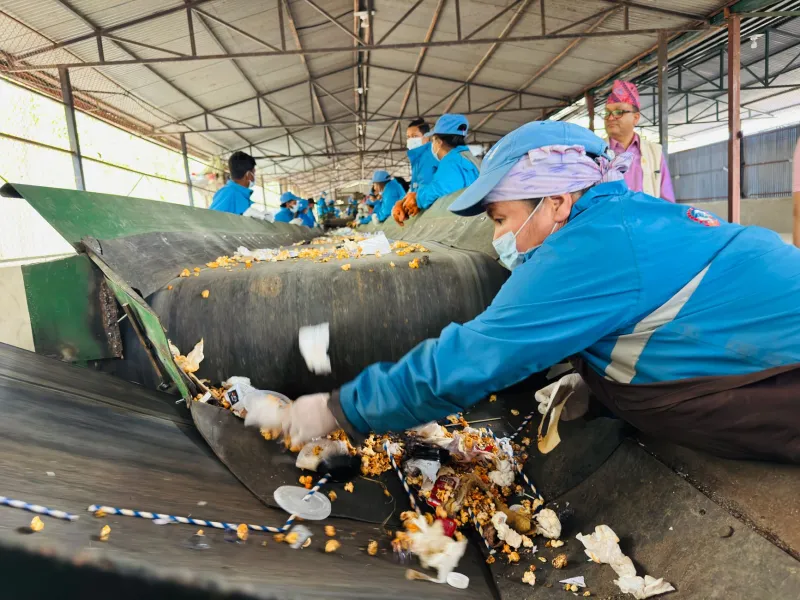
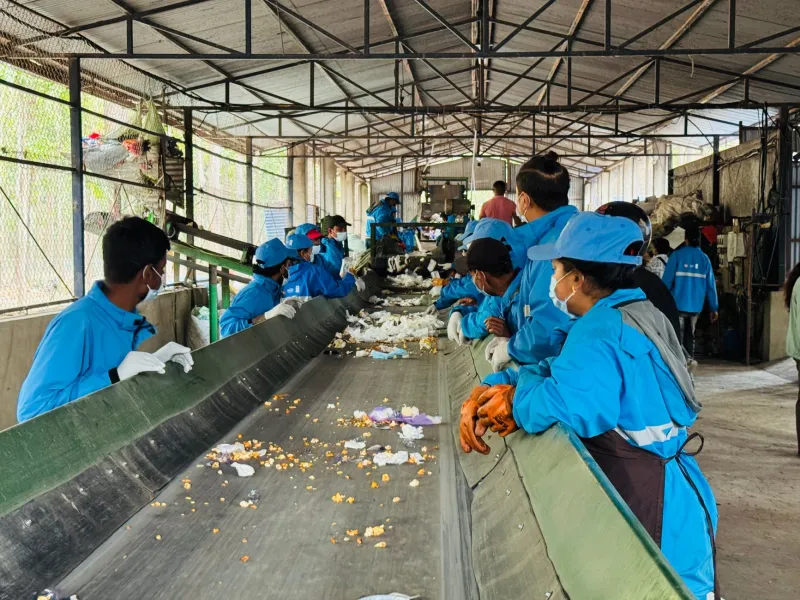
Let us be direct about something that the waste management industry, municipal governments, and consumer brands have been reluctant to state plainly: for millions of Americans, recycling is largely performative. Not because residents lack commitment or effort, but because the infrastructure designed to process their carefully sorted materials is inadequate, inconsistent, and in many regions, functionally broken.
This is an uncomfortable assertion. Recycling has become a cornerstone of American environmental identity — the act through which ordinary people participate in something larger than themselves, a daily ritual of responsibility. Questioning its efficacy feels, to many, like an attack on good intentions. It is not. It is a necessary confrontation with a systemic failure that good intentions alone cannot remedy.
The Fragmentation Problem
The United States has no national recycling standard. What is accepted in Seattle may be categorically rejected in Memphis. The materials a household in Portland, Oregon can place at the curb bear little resemblance to what a family in rural Alabama can recycle at all. This fragmentation is not incidental — it is the direct consequence of a policy framework that has historically delegated waste management almost entirely to local governments, with minimal federal coordination, standardization, or funding.
Approximately 9,800 curbside recycling programs operate across the country, each governed by its own accepted materials list, processing contracts, and contamination thresholds. When market conditions shift — as they did dramatically after China's 2018 National Sword policy — individual municipalities are left to absorb the financial shock independently. Many cannot. The result is programs quietly curtailed, materials quietly landfilled, and residents quietly misled about where their recyclables actually go.
A 2020 investigation by Waste Dive found that numerous US cities had begun landfilling or incinerating materials previously marketed to residents as recyclable, with minimal public disclosure. The transparency gap is not merely inconvenient — it is a breach of public trust that corrodes the civic engagement recycling programs depend upon.
The Corporate Accountability Gap
While municipal programs shoulder the operational burden of managing post-consumer waste, the companies responsible for generating that waste have faced comparatively limited accountability. The American packaging industry produces billions of units of single-use plastic annually, much of it in material types for which no viable recycling pathway exists. The cost of managing that waste falls to local governments and, ultimately, to taxpayers.
This arrangement is not accidental. For decades, the packaging and plastics industries have invested substantially in promoting recycling as the primary solution to plastic pollution — a strategy that, as previously noted, keeps the focus on consumer behavior rather than producer responsibility. When recycling systems fail, the narrative blames contamination, consumer error, or insufficient public education. The fundamental question — why are non-recyclable materials being produced and sold at scale in the first place — receives far less scrutiny.
Extended producer responsibility (EPR) legislation represents the most direct policy mechanism for correcting this imbalance. Under EPR frameworks, manufacturers are required to fund and, in some models, operationally manage the collection and processing of their products at end of life. This shifts the financial burden from taxpayers to producers and creates a powerful economic incentive for companies to design products with recyclability in mind from the outset.
Oregon's Plastic Pollution and Recycling Modernization Act, signed into law in 2021, represents one of the most comprehensive EPR frameworks enacted in the US. California, Maine, and Colorado have enacted similar legislation. The momentum is real — but federal action remains absent, leaving a patchwork of state-level standards that the packaging industry continues to navigate with varying degrees of good faith.
Infrastructure Investment: The Neglected Foundation
Even a perfectly designed EPR system cannot function without adequate processing infrastructure. The United States has chronically underinvested in domestic recycling capacity, preferring for decades to export collected materials to overseas markets — primarily China — rather than building the sorting, reprocessing, and manufacturing facilities required to close the loop domestically.
The consequences of that neglect became inescapable in 2018. With export markets effectively closed, American MRFs discovered they lacked the domestic end markets and processing capacity to absorb the volume of material they were collecting. Commodity prices collapsed. Programs contracted. And the public, largely unaware of these structural realities, continued sorting and binning with undiminished optimism.
Rebuilding domestic recycling infrastructure requires capital investment at a scale that local governments cannot independently sustain. Federal infrastructure funding — including provisions within the Bipartisan Infrastructure Law of 2021, which allocated $350 million for recycling programs through the EPA — represents a meaningful start, but analysts broadly agree that the scale of investment required is substantially larger.
What Citizens Can Do — Beyond the Blue Bin
Individual recycling behavior matters. Contamination reduction, proper sorting, and engagement with local accepted materials lists all contribute meaningfully to program performance. But the most impactful actions available to American citizens extend well beyond the household bin.
Engage with local government. Attend municipal council meetings where waste management contracts are discussed. Ask your city or county officials directly: what percentage of collected recyclables are actually processed? Where do materials go? What is the contamination rate? Demand transparency as a baseline expectation.
Support EPR legislation at the state and federal level. Contact your state legislators and members of Congress to express support for producer responsibility frameworks. Organizations including the Surfrider Foundation, the Product Stewardship Institute, and GAIA provide advocacy resources and action alerts.
Hold brands accountable. Consumer pressure has historically been among the most effective levers for corporate behavior change. Choose products with genuinely recyclable packaging where alternatives exist, and communicate directly with companies whose packaging practices fall short. Many major consumer brands now publish sustainability reports with specific packaging commitments — those commitments are worth tracking and questioning.
Support local recycling infrastructure. Patronize businesses and programs that process materials locally. Advocate for investment in community composting, reuse networks, and repair economies that reduce waste generation at the source.
The System We Deserve — And How to Build It
America's recycling crisis is, at its core, a governance failure. It reflects decades of diffuse responsibility, inadequate investment, and a political environment in which the costs of inaction are dispersed across millions of households and future generations, while the benefits of the status quo accrue to a concentrated set of producers and processors.
The solution is not to abandon recycling — it is to build a system worthy of the public trust it has long claimed. That means federal standards for recyclability labeling. It means producer responsibility frameworks with real enforcement teeth. It means investment in domestic processing infrastructure commensurate with the volume of material Americans generate. And it means honest communication from municipalities about what their programs can and cannot actually accomplish.
At Supreme Recyclings, we operate at the intersection of these challenges daily. We understand that responsible waste management is not simply a matter of logistics — it is a matter of integrity. The materials we handle represent real environmental stakes, and the communities we serve deserve systems that match their commitment with genuine outcomes. The path to a functional recycling infrastructure in this country is neither short nor simple, but it begins with an honest accounting of where we currently stand.