What's Really Inside Your Old Phone: The Hidden Mineral Wealth Fueling America's Urban Mining Revolution
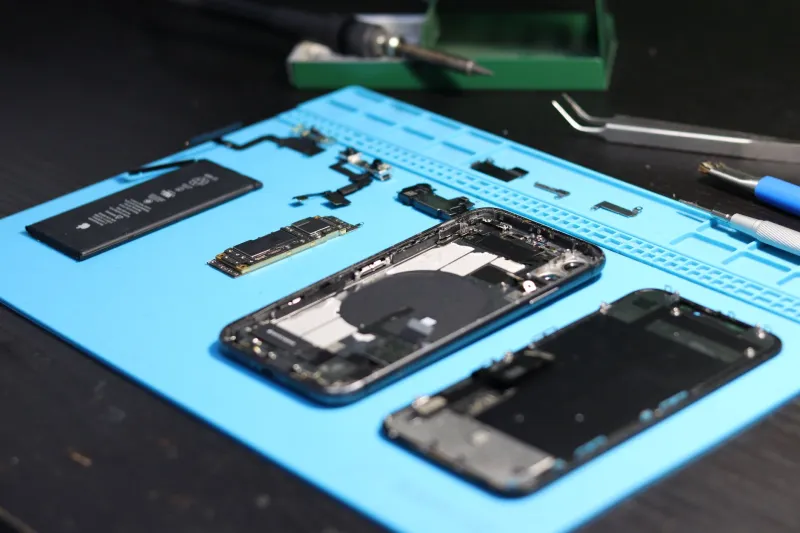
Somewhere in a drawer, a closet, or a landfill near you, there is a small rectangle of glass and metal that contains gold. Not metaphorical gold — actual, refined, recoverable gold. The same is true of the laptop collecting dust on your shelf, the tablet your child no longer uses, and the fitness tracker you replaced two versions ago. Collectively, Americans discard hundreds of millions of electronic devices each year, and the mineral wealth locked inside those discarded items represents one of the most underappreciated resource opportunities in the country.
Understanding what is actually inside these devices — and why recovering it matters — is central to how companies like Supreme Recyclings are approaching the future of waste management.
The Elemental Composition of a Modern Device
To appreciate the scale of what gets thrown away, it helps to understand what modern electronics are actually made of. A single smartphone contains approximately 0.034 grams of gold, 0.34 grams of silver, 0.015 grams of palladium, and trace quantities of platinum. It also contains copper, cobalt, lithium, and a collection of rare earth elements — including neodymium, praseodymium, and dysprosium — that are essential to the magnets, speakers, and vibration motors that make the device function.
Those quantities sound small in isolation. But consider the math at scale. According to estimates from the United Nations Environment Programme, one metric ton of circuit boards contains between 250 and 400 times more gold than one metric ton of gold ore extracted from a conventional mine. A traditional gold mine might yield as little as five grams of gold per ton of rock. A ton of processed circuit boards can yield upward of 350 grams.
The numbers are not hypothetical. They are the foundation of a rapidly expanding sector known as urban mining — the systematic recovery of valuable materials from discarded electronics and other manufactured goods.
Why Consumers Don't Know What They're Discarding
Despite the extraordinary value sitting in American junk drawers, consumer awareness remains remarkably low. Surveys consistently show that most Americans believe their old phones are essentially worthless once they stop working or become technologically obsolete. That perception is reinforced by the way devices are marketed — as consumer products with a lifespan, not as temporary vessels for industrial materials.
The gap between perception and reality has real consequences. The United States generates more electronic waste per capita than almost any other nation. The EPA estimates that fewer than 20 percent of discarded electronics are properly recycled. The remainder ends up in landfills, in storage, or — in a troubling number of cases — exported to informal recycling operations overseas where materials are recovered under dangerous conditions with little regard for environmental or human health standards.
What is lost in this process is not merely economic value. Rare earth elements, in particular, are subject to significant geopolitical pressure. The United States currently imports the vast majority of its rare earth supply from a small number of foreign sources, a dependency that has drawn increasing scrutiny from policymakers and defense analysts alike. Recovering these materials domestically is not just a business opportunity — it is a matter of national resource security.
How Advanced Recycling Is Changing the Equation
The technology required to recover precious metals from electronics has advanced considerably over the past decade. Early urban mining operations relied heavily on manual disassembly and crude smelting processes that were both labor-intensive and environmentally problematic. Modern facilities now employ a combination of mechanical shredding, eddy current separation, hydrometallurgical processing, and pyrometallurgical refining to isolate and recover materials with increasing precision and yield.
Hydrometallurgy — the use of aqueous chemical solutions to selectively dissolve and extract metals — has proven particularly effective for recovering gold and silver from printed circuit boards. The process produces high-purity outputs that can be reintroduced directly into manufacturing supply chains, reducing the demand for newly mined material.
At the same time, automated disassembly systems are improving the economics of battery and component recovery. Lithium-ion battery packs, which power everything from smartphones to electric vehicles, contain lithium, cobalt, nickel, and manganese — all materials with substantial market value and constrained natural supply. Recovering them at scale is increasingly viable, and the economics are improving as battery volumes grow and commodity prices remain elevated.
Supreme Recyclings and the Urban Mining Opportunity
At Supreme Recyclings, the convergence of environmental responsibility and economic opportunity is not a marketing abstraction — it is an operational reality. The company's approach to electronic waste processing reflects a fundamental conviction: that discarded devices are not waste in any meaningful sense. They are feedstocks. They are inputs to a manufacturing system that desperately needs domestic sources of critical materials.
This perspective shapes how Supreme Recyclings engages with both corporate clients and individual consumers. Businesses that generate significant volumes of electronic waste — financial institutions retiring server infrastructure, healthcare organizations replacing diagnostic equipment, retailers cycling through point-of-sale technology — are increasingly recognizing that responsible disposal is not simply a compliance obligation. It is a potential revenue stream, or at minimum a cost offset, when handled by a processor with genuine material recovery capabilities.
For individual consumers, the message is equally direct: the devices you are holding onto, or worse, discarding improperly, have real value. Channeling them through certified recycling programs ensures that value is recovered responsibly, that hazardous materials are managed appropriately, and that the environmental cost of new extraction is reduced.
The Broader Stakes of Getting This Right
The urban mining conversation intersects with several of the most consequential policy debates of this decade. Climate change mitigation depends heavily on the expansion of renewable energy and electric vehicle infrastructure — both of which require enormous quantities of precisely the materials that can be recovered from discarded electronics. Lithium, cobalt, nickel, and rare earth elements are not optional components of a clean energy transition; they are essential ones.
If those materials continue to be buried in landfills or exported in unprocessed form, the United States will remain dependent on foreign extraction to meet domestic manufacturing demand. That dependency carries environmental costs — mining is among the most disruptive land-use activities on earth — as well as strategic vulnerabilities that have already prompted federal attention through initiatives like the Critical Minerals Strategy and provisions within recent domestic manufacturing legislation.
The recycling sector sits at a unique intersection of all these pressures. It is, simultaneously, an environmental service, an industrial supplier, a national security asset, and a business opportunity. Companies that understand and operate across all of those dimensions are well-positioned to play a significant role in how the United States manages its material future.
Turning Awareness Into Action
The first step toward capturing the value embedded in discarded electronics is simply acknowledging that the value exists. Most Americans are not making a conscious decision to throw away gold and rare earth elements — they are making a decision to throw away an old phone, without fully understanding what that phone contains.
Changing that understanding is part of what drives the educational mission at Supreme Recyclings. When consumers and businesses recognize that proper electronic waste recycling is not a charitable act but a materially meaningful one — for the environment, for the economy, and for the security of domestic supply chains — the case for participation becomes considerably stronger.
The minerals are there. The technology to recover them is mature and improving. The demand for what they produce is growing. What remains is the collective will to stop treating discarded electronics as refuse and start treating them as what they actually are: a concentrated, recoverable, and genuinely valuable national resource.