Invisible Threat, Visible Consequences: How the Plastics Recycling Industry Is Confronting America's Microplastic Emergency
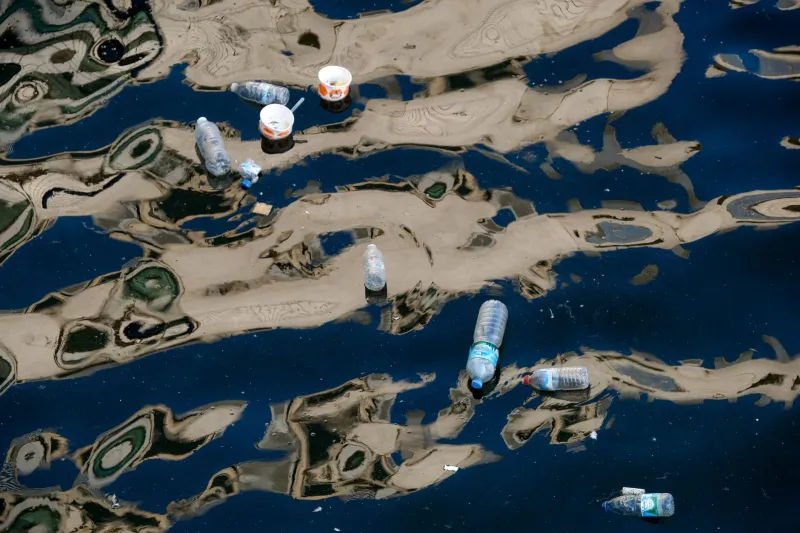
The water flowing from a kitchen tap in suburban Ohio looks clean. It passes federal standards, carries the appropriate certifications, and arrives without visible impurity. Yet according to a growing body of peer-reviewed research, that same water almost certainly contains microplastics — fragments measuring less than five millimeters, many invisible to the naked eye, originating from plastic waste that was never properly recovered, processed, or contained.
This is not a distant, theoretical concern. A 2022 study published in Environmental Science & Technology found microplastics in the blood of nearly 80 percent of human test subjects sampled. The United States Geological Survey has detected plastic particles in rainfall across the Rocky Mountains, in groundwater wells in rural communities, and in the drinking water supplies of major metropolitan areas including Chicago and New York. The source, researchers increasingly agree, is not any single industrial event — it is the slow, systemic degradation of plastic that was never adequately recycled.
Where Recycling Fails, Pollution Begins
The connection between inadequate recycling infrastructure and microplastic contamination is more direct than most consumers realize. When plastic is exposed to ultraviolet radiation, mechanical stress, or the elements — conditions common to improperly stored, contaminated, or unprocessed recyclable material — it does not disappear. It fractures. Polymers break into progressively smaller pieces, eventually reaching microscopic dimensions that slip past conventional water filtration systems and enter the food chain.
Dr. Sherri Mason, a sustainability coordinator and environmental chemist whose research has been cited in congressional testimony, describes the process as "plastic in slow motion." In a recent interview with a national environmental publication, she noted that the most dangerous stage of plastic's lifecycle is often not its manufacture or its disposal, but the liminal period when it sits unrecovered — in a landfill, on a roadside, or in a poorly managed recycling stream where contamination has rendered it unprocessable.
This is precisely where the recycling industry's role becomes critical, and where its failures carry the most significant downstream consequences.
The Contamination Problem No One Talks About
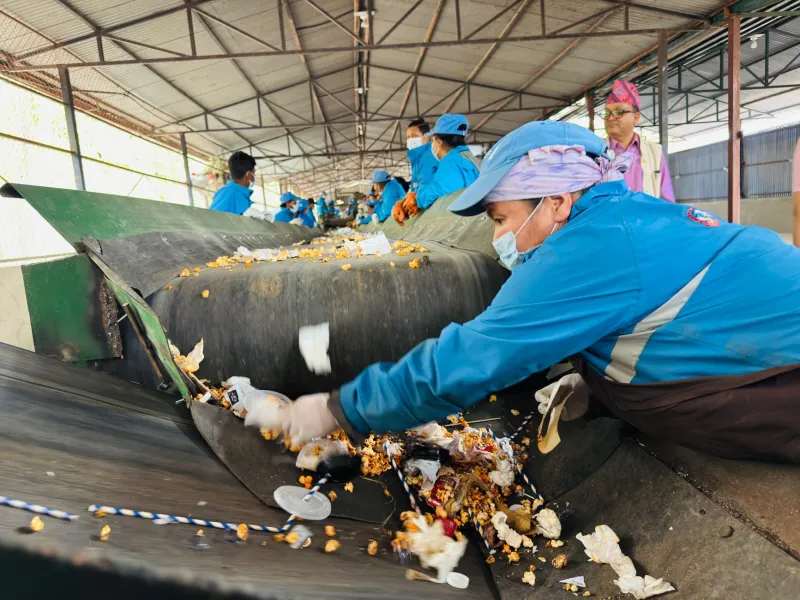
For years, public conversation around recycling has focused on participation rates — how many households sort their waste, how many municipalities offer curbside pickup, how many tons of material are diverted from landfills annually. These metrics matter, but they obscure a more uncomfortable reality: a substantial portion of material placed in recycling bins across the United States is never actually recycled.
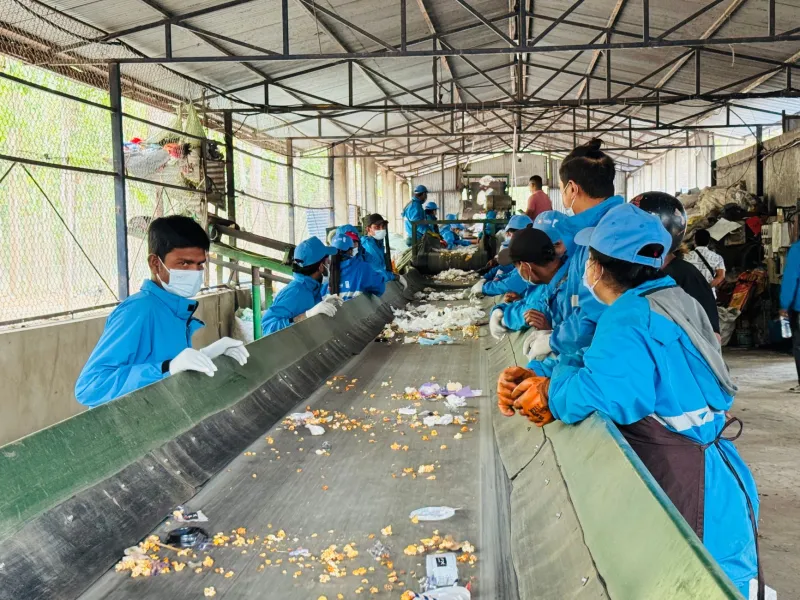
Contaminated loads — plastics mixed with food residue, non-recyclable materials sorted incorrectly, or materials degraded beyond reprocessing viability — are routinely rejected at materials recovery facilities, or MRFs. Once rejected, that material frequently ends up in a landfill or, worse, in open waste streams where degradation accelerates.
According to the Environmental Protection Agency, the United States generated approximately 40 million tons of plastic waste in 2021. Less than nine percent was recycled. The remainder entered landfills, incinerators, or unmanaged environments — each pathway contributing, in varying degrees, to the microplastic burden now measurable in American waterways.
Recycling professionals working at the operational level are acutely aware of the gap between public perception and facility reality. "People believe that putting a plastic bottle in the bin is the end of the story," noted one MRF operations manager based in the Mid-Atlantic region, speaking on background. "What they don't see is how much of what comes in can't be processed because it's too contaminated, too degraded, or made of a plastic type we simply don't have a market for."
Technology Stepping Into the Gap
The recycling sector has not been passive in the face of this challenge. A new generation of processing technologies is being deployed at facilities across the country, specifically designed to extend the range of plastics that can be recovered and to reduce the degradation that occurs during handling.
Advanced optical sorting systems, now operational at several large-scale MRFs in California, Texas, and the Pacific Northwest, use near-infrared spectroscopy to identify and separate plastic resin types at speeds and accuracy levels that manual sorting cannot approach. This precision matters enormously: mixing incompatible plastic types during processing is one of the primary drivers of material degradation, producing lower-grade output that is more likely to fracture into microparticles during its next lifecycle.
Chemical recycling — a process that breaks polymers down to their molecular precursors rather than mechanically reprocessing them — represents perhaps the most significant technological leap in the field. Companies including Eastman Chemical and Plastic Energy have invested heavily in pyrolysis and solvolysis systems capable of handling mixed or contaminated plastic streams that conventional mechanical recycling cannot accommodate. Proponents argue that chemical recycling could dramatically increase the proportion of plastic that re-enters productive use rather than degrading in the environment.
Critics, including several environmental advocacy organizations, raise valid concerns about the energy intensity of chemical recycling and the potential for toxic byproducts if not carefully managed. The technology's supporters counter that the alternative — allowing millions of tons of plastic to degrade into microparticles annually — carries far greater environmental cost.
The Role of Facility-Level Standards
Beyond technology, industry practitioners and environmental researchers are converging on a shared conclusion: facility-level standards for plastic handling must become more rigorous if the microplastic pipeline is to be meaningfully interrupted.
This includes tighter controls on material storage conditions to minimize UV exposure and physical degradation prior to processing, improved sorting protocols that prevent incompatible resins from entering the same processing stream, and more transparent reporting on rejection rates and the ultimate fate of unprocessed material.
Some recycling operators have begun partnering directly with municipal water authorities to share data on plastic waste flows in their regions — a collaborative model that enables more targeted contamination prevention upstream. In Oregon, a pilot program linking county recycling coordinators with watershed management agencies demonstrated a measurable reduction in plastic fragment detection in monitored waterways over an eighteen-month period.
What Consumers Can Do — and Why It Matters More Than They Think
For residents of the United States navigating an already confusing recycling landscape, the microplastic crisis adds a layer of urgency to choices that might otherwise seem inconsequential. Rinsing plastics before recycling them reduces contamination and extends the viability of material through the processing chain. Avoiding single-use plastics where alternatives exist removes material from the waste stream entirely. Understanding which plastic resin types are accepted by local facilities — rather than aspirationally recycling items that are not — prevents the kind of contamination that leads to entire loads being diverted to landfill.
Perhaps most importantly, consumers can apply pressure on manufacturers to design products using plastics that are genuinely recyclable within existing infrastructure, rather than technically recyclable under laboratory conditions that bear no resemblance to how waste is actually managed.
A Problem That Demands Systemic Honesty
The microplastic crisis is not a failure of public willingness. Americans, by and large, want to recycle. The failure is systemic — rooted in infrastructure gaps, regulatory inconsistency, market volatility for recovered materials, and decades of industry messaging that prioritized the appearance of recycling over its substance.
Addressing it will require investment in processing technology, stronger federal standards for plastic recyclability claims, and a recycling sector willing to be transparent about what it can and cannot currently handle. The science is unambiguous about what is at stake. The question now is whether the institutions responsible for managing America's waste will respond with the seriousness the evidence demands.