From Worn to Rewoven: How American Fashion Brands Are Engineering the End of Clothing Waste
Every year, Americans discard roughly 17 million tons of textiles. The vast majority — an estimated 85 percent — ends up in landfills or incinerators, according to the Environmental Protection Agency. For decades, the fashion industry accepted this reality as an unavoidable cost of doing business. Garments were designed to be sold, worn, and forgotten. The infrastructure to do anything else simply did not exist at meaningful scale.
That infrastructure is now being built — and the companies leading the effort are not waiting for regulation to force their hand.
The Take-Back Model Comes of Age
The concept of brand-operated take-back programs is not new. Patagonia's Worn Wear initiative, launched over a decade ago, became something of an industry reference point — a model demonstrating that customers would, in fact, return garments if given a clear and convenient mechanism to do so. What has changed in recent years is the ambition behind these programs and the technology supporting what happens to clothing once it is returned.
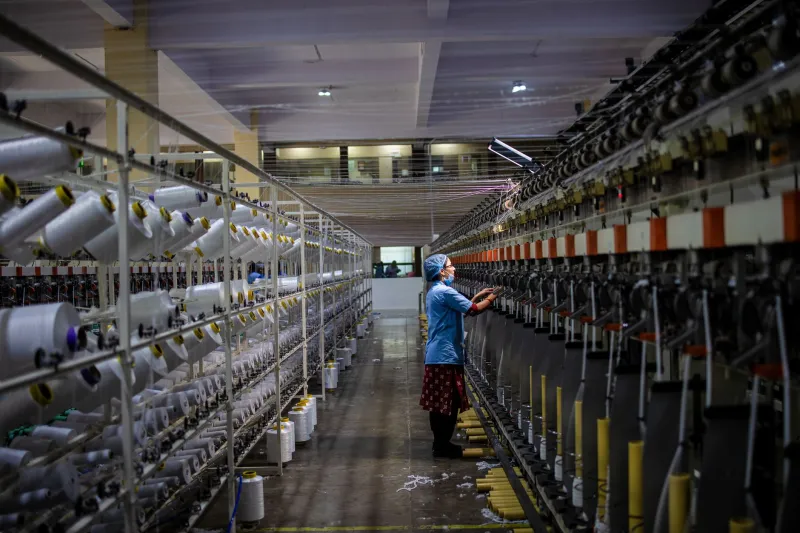
Earlier take-back efforts were largely limited to resale and repair. A returned fleece jacket might be cleaned, patched, and resold at a discount. Useful, certainly, but not transformative. The more significant development now underway involves brands creating or partnering with facilities capable of breaking garments down to their raw fiber components and reintroducing that material into new production — a process known as fiber-to-fiber recycling.
This is the closed-loop model in its truest form: a garment that ends its useful life not in a landfill, but in the supply chain of its successor.
What Makes Fiber-to-Fiber Recycling Viable
For years, fiber-to-fiber recycling at commercial scale was constrained by two stubborn problems. The first was material complexity. Most modern garments are blends — cotton and polyester, wool and nylon, spandex woven into nearly everything. Separating these fibers without destroying their integrity proved technically difficult and economically prohibitive.
The second problem was collection. Recycling technology is only as effective as the volume and consistency of material feeding into it. Without reliable streams of post-consumer textiles, processing facilities could not operate efficiently.
Both obstacles are yielding to sustained investment and innovation. Chemical recycling processes, including hydrothermal and enzymatic breakdown methods, can now dissolve and reconstitute cotton fibers from blended fabrics with increasing efficiency. Companies such as Renewlane and Evrnu have advanced proprietary technologies that convert worn cotton garments into virgin-quality fiber suitable for new yarn production. On the synthetic side, mechanical and chemical depolymerization processes are enabling polyester recovery from post-consumer textiles at scales that were commercially impractical just five years ago.
The collection problem is being addressed through a combination of in-store drop-off infrastructure, mail-back programs, and municipal partnerships. Several major American retailers have installed dedicated textile collection bins across their store networks, creating consistent input streams for downstream processors.
Newer Brands Raising the Stakes
While legacy outdoor brands like Patagonia and REI helped establish the philosophical foundation, a newer generation of American clothing companies is treating circularity not as a marketing differentiator but as a core operational commitment.
ThredUp, though primarily a resale platform, has published data that continues to reframe consumer expectations around clothing longevity. Meanwhile, brands such as Eileen Fisher — which has operated its own take-back and resale program, Renew, for over fifteen years — are demonstrating that circular models can function profitably within mid-to-premium market segments.
Perhaps more telling is the activity at the startup level. Companies like Recover, which processes cotton textile waste in the United States and abroad, are building industrial-scale recycling capacity specifically to serve fashion brands seeking certified recycled fiber. The existence of these dedicated processors signals that the supply chain is maturing — that brands willing to commit to closed-loop sourcing now have credible partners to work with.
The Fast Fashion Problem and Why It Matters Here
Any honest accounting of American textile waste must grapple with fast fashion. The business model — premised on rapid design cycles, low price points, and high turnover — produces garments that are difficult to recycle, rarely designed with end-of-life in mind, and purchased in volumes that overwhelm even well-resourced take-back systems.
This is not a peripheral concern. Fast fashion accounts for a substantial share of the garments that enter America's waste stream each year. Closed-loop systems built by premium or outdoor brands, however admirable, cannot by themselves resolve a waste challenge driven largely by volume at the lower end of the market.
The more durable solution involves extending circular design principles into mass-market manufacturing — engineering garments from the outset with fiber recovery in mind, reducing blend complexity, and standardizing material labeling so that downstream processors can sort and route textiles efficiently. Some brands are beginning to move in this direction, but progress remains uneven and the financial incentives to do so are not yet sufficiently compelling across the industry.
The Consumer's Role in a Circular System
Closed-loop fashion systems cannot function without consumer participation. The most sophisticated take-back infrastructure produces no value if garments are simply thrown in the trash at the end of their useful life — which remains, by a wide margin, the most common outcome.
Changing this behavior requires two things: convenience and awareness. On the convenience side, the expansion of in-store collection points and prepaid mail-back options has meaningfully lowered the barrier to return. On the awareness side, brands and retailers bear responsibility for communicating clearly what take-back programs exist, how they work, and what happens to returned garments.
For American consumers, the practical implication is straightforward. Before discarding a worn garment, it is worth checking whether the brand that manufactured it operates a take-back program, whether a local retailer accepts textile donations for processing, or whether a community textile recycler operates in your area. These pathways exist with increasing frequency — and using them makes a material difference.
A Structural Shift, Not a Trend
What is unfolding in American fashion is not a marketing cycle or a sustainability trend in the conventional sense. It is the gradual construction of a new material infrastructure — one in which clothing is treated as a resource to be recovered rather than a product to be discarded.
The economics are not yet fully favorable across all market segments, and significant technical and logistical challenges remain. But the trajectory is clear. Investment in textile recycling technology is accelerating. Consumer expectations around product responsibility are rising. And the regulatory environment — particularly at the state level — is beginning to reflect growing pressure to address textile waste more systematically.
For a waste management perspective, this evolution represents exactly the kind of systemic change that moves the needle. Incremental recycling improvements matter, but redesigning product systems so that waste is structurally reduced at the source matters far more. American fashion, slowly and imperfectly, is beginning to do just that.